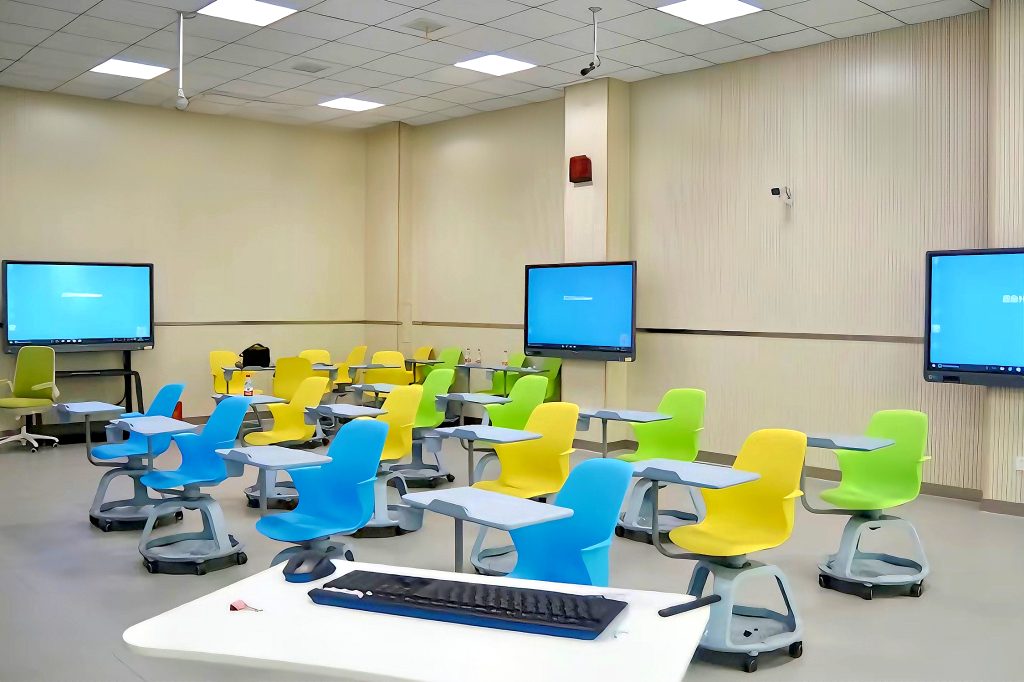
With the development of education, teaching formats continue to evolve. Interactive and inquiry-based teaching is increasingly favored by parents, while research-based, project-based, and collaborative learning models are becoming more widely valued in schools.
Breaking away from traditional teaching methods and encouraging innovation in education can create more possibilities for the classroom. As a result, student desks and chairs should also adapt to these changes in educational practice.
In the past, student desk and chair designs were often limited in form. Although some may have appeared visually appealing, they were not always suitable for long periods of sitting and could negatively affect students’ focus and comfort.
Based on the current direction of educational development, suitable classroom tables and chairs should be designed to better support modern learning environments.
Ergonomically designed chairs can help relieve pressure on the spine and provide better waist support for long periods of sitting. At the same time, desks and chairs equipped with 360-degree rollers can be moved easily at any time, allowing classrooms to shift quickly into group-based layouts that better support collaborative learning.