
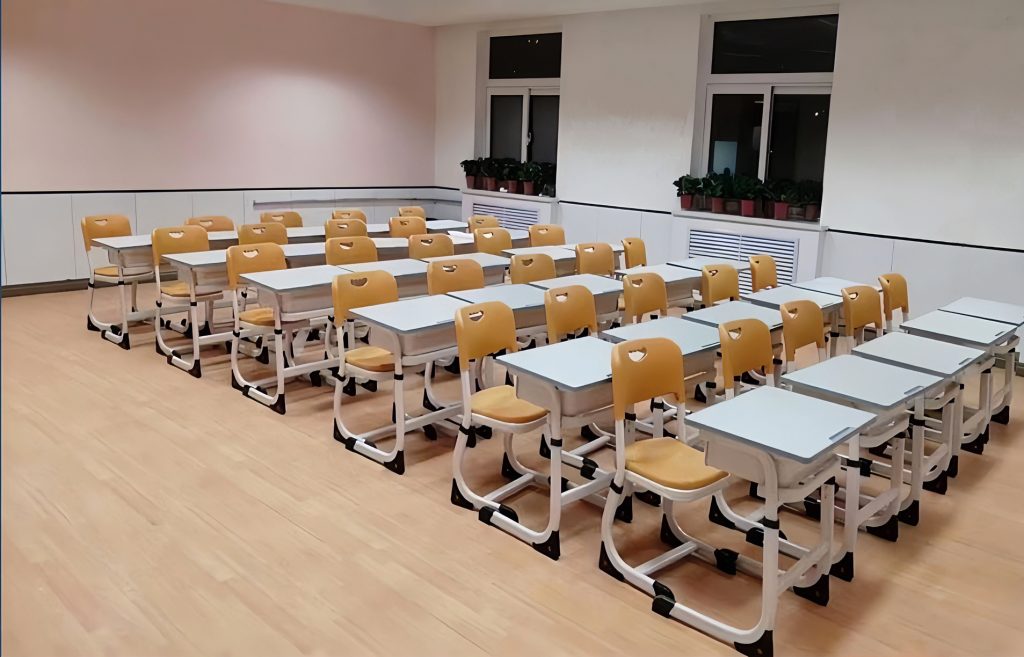
As the educational landscape continues to evolve, the demand for adaptable and space-saving classroom furniture has grown significantly. With greater emphasis on teamwork and group-based learning, the traditional classroom setup is changing. Schools are increasingly looking for flexible furniture solutions that not only provide comfort but also encourage student participation and interaction.
Folding tables are a practical example of this shift. They are designed to be flexible, mobile, and easy to store, making them an efficient choice for classrooms and meeting spaces of different sizes.
These tables are typically made from materials that are both lightweight and durable, allowing them to remain easy to move while still offering long-term reliability.
Folding classroom tables are available in a wide range of shapes and sizes, including rectangular and trapezoidal designs. This variety makes it easier to create different layouts that support various teaching methods, classroom activities, and collaborative tasks.
Some models are equipped with wheels for easier transportation, while others feature height-adjustable legs to better suit students of different ages and sizes.
The growing popularity of folding classroom tables comes from their ability to adapt to the ever-changing needs of modern learning environments. As educational institutions continue to build more engaging and interactive spaces, foldable classroom tables are becoming an increasingly important part of classroom design.